
Grūtas Park: history and visiting
Grutas Park’s sculpture collection, opening history and contested interpretation, with operator resources for a visit near Druskininkai in Lithuania.
Last updated October 2026
Contents6
Grūtas Park displays Soviet-era monuments near Druskininkai in southern Lithuania. Sculptures removed from streets and squares form an outdoor collection. A visit raises questions about the monuments' political meaning and the park's approach to presenting them.
Collection and opening history
The park's published history dates its opening to 2001. The collection brought Soviet monuments removed from public places into a park setting near Druskininkai. The operator identifies Viliumas Malinauskas as the organiser of the project.
A sculpture's manufacture, its installation in a city, its removal and its display at Grūtas are different stages in its history. Read the object labels for those dates and locations. They help explain how a work's setting changed when it moved from a public square to the collection.
What Soviet monuments represented
Monuments to political leaders and ideological figures occupied public space under Soviet rule. Their scale, inscriptions and placement conveyed state authority as well as an artistic style. Moving them changes their relationship with the street, square or institution where they stood. A park can preserve an object while also altering the way its political meaning is encountered.
For Lithuania's occupation history, use the Museum of Occupations and Freedom Fights and the Baltic occupation museums guide. Those sources provide a different kind of context from the park operator's account of its collection. A sculpture label alone cannot explain deportation, imprisonment or the whole structure of Soviet rule.
Contested interpretation
The park's presentation has prompted debate about the line between preserving history and turning repression into spectacle. Visionscarto's contextual essay discusses that tension. Its critical interpretation is attributable commentary, not a statement that every visitor or historian shares one judgment.
Read the operator's aims and the criticism separately. Ask whether a display explains the people affected by the regime, whether the object's public function under Soviet rule is clear, and how recreational elements sit beside the historical material. Those questions give the visit a focus beyond photographing the sculptures.
Visiting from Druskininkai
Use the official park website for the address, seasonal hours, admission and visitor arrangements. Grūtas is outside central Druskininkai, so confirm the actual route rather than treating it as a short town-centre walk. If using public transport, check the service and the distance from the stop. If using a taxi, arrange how to return.
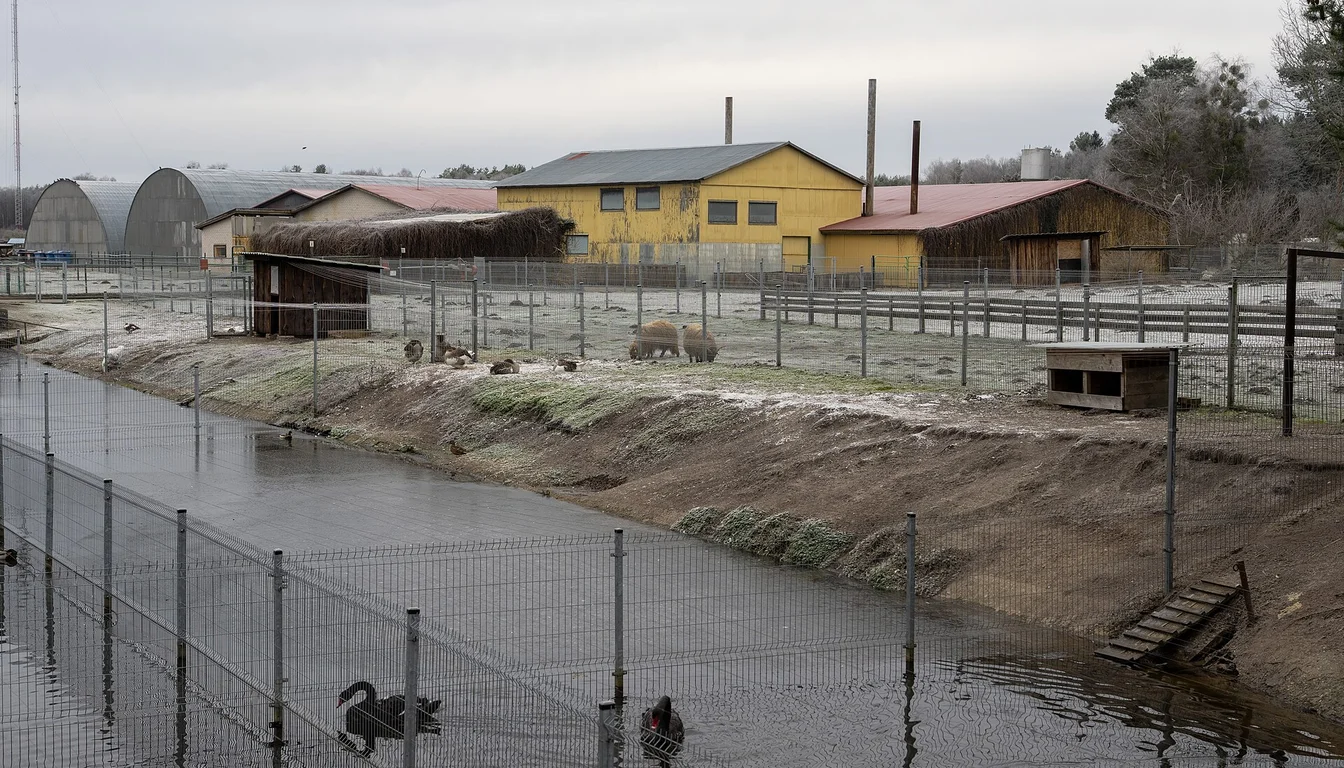
The lead photograph shows the park's visitor grounds and zoo enclosure. These recreational areas are part of the setting visitors encounter alongside the historical collection.
An outdoor sculpture collection is affected by weather and daylight. Confirm terrain and access with the operator if you need a step-free route or assistance. A family visit also needs a decision about how to explain the subject to children. Do not promise that all facilities or displays are available simply because the grounds are open.
A wider Lithuania route
Druskininkai and Grūtas fit a route through southern Lithuania. The Lithuania trip guide helps place this side trip alongside Vilnius, Kaunas or Trakai. Compare Lithuania accommodation areas after deciding whether to stay near the park or return to another city.
The Baltic guidebook comparison can add historical background before the visit. Combine that reading with a national museum or memorial if occupation history is the main purpose of your trip. Leave time to read labels and consider the setting rather than treating the collection as a quick novelty stop.
Photograph credit
Grūtas Park zoo.jpg by Quintin Soloviev, CC BY 4.0. Cropped and resized.
