
Baltic occupation museums and memorials
Separate Baltic occupation periods, Rumbula, resistance and the January 1991 events, with museum and memorial sources for respectful visits.
Last updated October 2026
Contents8
Occupation museums and memorials explain different kinds of violence and resistance. Nazi persecution, the Holocaust, Soviet repression and armed anti-Soviet resistance must not be compressed into one interchangeable story. Begin with the institution's dates and purpose, then read the account of the people connected with that particular place.
Distinguish the occupation periods
The Soviet Union occupied Estonia, Latvia and Lithuania in 1940. Nazi German occupation followed during the Second World War. Soviet rule returned as the German occupation ended, and continued until restored independence. The Museum of the Occupation of Latvia, Vabamu and Lithuania's Museum of Occupations and Freedom Fights interpret these periods through their own national collections.
Dates and institutions matter more than treating all sites as variations of one museum. A Holocaust memorial commemorates people murdered because they were Jewish. A political-prison exhibition may address a different persecuted population and a different state apparatus. Give each history its own attention.
Rumbula: 30 November and 8 December 1941
Mass shootings at Rumbula near Riga took place on 30 November and 8 December 1941. The Latvian Jewish community's memorial record describes more than 25,000 victims, including Jews from the Riga ghetto and about a thousand deported from Germany. Figures are estimates of a mass murder, not a precise passenger-style register.
The joint museum exhibition Rumbula 1941 documents the operation under Nazi German authority, including Friedrich Jeckeln's role and the involvement of local collaborators. The exhibition places the victims' movement from the ghetto and the mass shootings within the organised Holocaust.
The memorial is a place for remembrance. Use the Jewish community's location information to plan the journey and allow for the route back to Riga. Keep voices low, respect inscriptions and leave people who are grieving undisturbed. Check route conditions and transport before setting out.
Vabamu: founding, donor and collections
Tallinn's Vabamu Museum of Occupations and Freedom began through the foundation established by Olga Kistler-Ritso and her family. The museum's own history records the foundation in 1998 and the museum opening on 1 July 2003. Vabamu's account of Olga Kistler-Ritso explains the donor's connection with Estonia and the museum's purpose.
The museum addresses occupation, resistance and freedom through objects and personal histories. Consult the current museum site for exhibitions, tickets, language options and access. The KGB Prison Cells are a separate site; confirm which address your booking covers.
Forest Brothers and anti-Soviet resistance
The term Forest Brothers describes armed resistance to Soviet rule across the Baltic countries, but the organisations, local circumstances and timelines differed. Lithuania's Museum of Occupations and Freedom Fights and the national occupation museums are starting points for country-specific evidence.
Read an individual group's history before making claims about its aims or conduct. Resistance to Soviet rule does not make every participant's biography identical or remove questions about wartime actions. Nor should a discussion of armed groups erase people subjected to deportation, imprisonment or coercion without taking part in fighting. Museum records can help separate those experiences.
Riga barricades and Juris Podnieks, January 1991
The 1991 Barricades Museum documents civilian defence of institutions in Riga in January 1991. Barricades, public mobilisation and the attack on the Interior Ministry belong to that specific struggle over Latvia's independence. A museum visit offers a fuller context than a single dramatic image.
Documentary filmmaker Juris Podnieks and his colleagues recorded the events. The Latvian National Film Centre's account identifies the Soviet attack on 20 January 1991 and cameramen Andris Slapiņš and Gvido Zvaigzne, who were fatally wounded. Their work is part of the documentary record of Latvia's struggle for independence.
Follow the Film Centre's film and screening information to explore Podnieks's work. Allow time after a barricades exhibition to reflect, and keep the museum visit separate from a hurried shopping schedule.
Vilnius January 1991
Soviet forces attacked the TV Tower and broadcasting facilities in Vilnius during the January 1991 crisis. Fourteen people are commemorated as victims of 13 January. The Seimas's parliamentary account documents the victims and the defence of independence. The parliament also preserves records of its January 1991 sittings, giving the institutional sequence alongside the memorial history.
The Vilnius TV Tower is both an operating visitor site and a place connected with the events. Check current memorial and exhibition access separately from any viewing or restaurant booking. A sightseeing ticket should not be assumed to cover every historical display. Keep the January 1991 story distinct from the later Medininkai killings.
A respectful museum route
Choose one main historical institution per day if its subject needs careful reading. Confirm photography rules and avoid photographing a person in grief. Do not touch memorial objects, leave entrances free and follow the institution's guidance about flowers or other acts of remembrance. These suggestions apply to a visit, not to evaluating whose suffering matters most.
The Lithuania route, Latvia vacation plan and Tallinn sights help place these institutions geographically. The Baltic guidebook comparison offers background for a trip with several museum days. The related Baltic history timeline keeps elections, constitutional decisions and troop withdrawals separate from museum opening dates.
Photograph credit
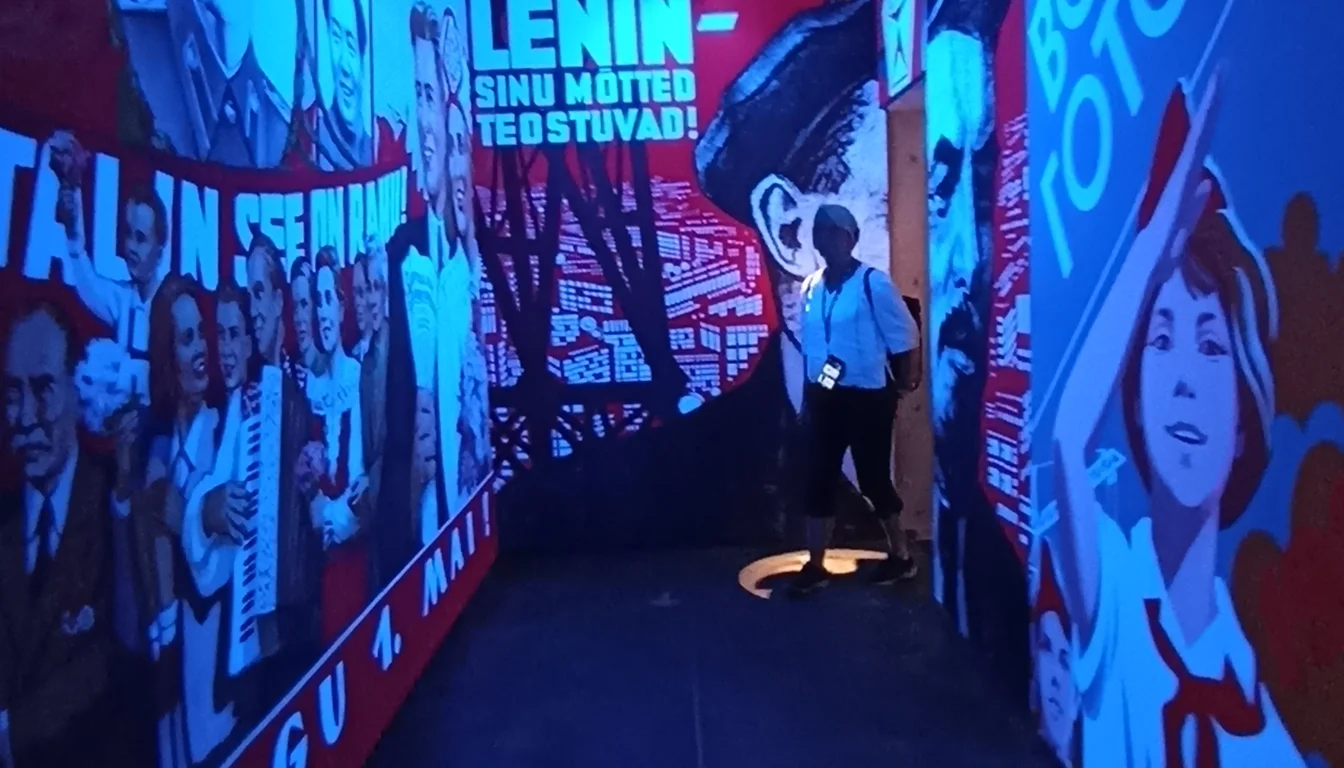
Museum of Occupations - May 2023 07.jpg by AwkwardChester, CC BY-SA 4.0. Cropped and resized.
