
Baltic history for visitors
Country timelines, independence and the 1999 state transitions, with museums to help explain each period.
Last updated October 2026
Contents9
- Estonia: independence and restored statehood
- March 1999: election and government
- Latvia: republic, occupation and restoration
- Troop withdrawal and Skrunda, 1993 to 1999
- Vaira Vike-Freiberga
- Lithuania: statehood and the 1991 defence of independence
- Lithuanian communities in Chicago
- Use museums to add context
- Photograph credit
The Baltic countries have connected histories, but they did not become independent through one identical sequence. Read Estonia, Latvia and Lithuania separately before comparing them. Their museums help explain medieval rule, national movements, occupation and restored independence through collections tied to a particular place.
Estonia: independence and restored statehood
Estonia proclaimed independence on 24 February 1918. War and occupation later interrupted independent government. Soviet occupation began in 1940; German occupation followed in 1941; Soviet rule returned in 1944. Estonia restored independence on 20 August 1991. The Riigikogu's account of restoring independence places that decision in its parliamentary context. The Estonian History Museum is a useful starting point for the longer chronology.
The 1992 constitutional settlement
Estonia's independence decision and its constitutional framework came at different stages. The Riigikogu's Constitutional Assembly history describes the drafting process and the referendum held on 28 June 1992. That settlement provided the framework for the restored parliament and subsequent governments. Keep this constitutional background separate from the 1999 election date.
March 1999: election and government
Estonia held its parliamentary election on 7 March 1999, as recorded by the Estonian electoral authority. Mart Laar's government entered office on 25 March. The government's record of its 30 March sitting identifies that appointment date. The election and the new government's entry into office were separate stages in the same month's political transition.
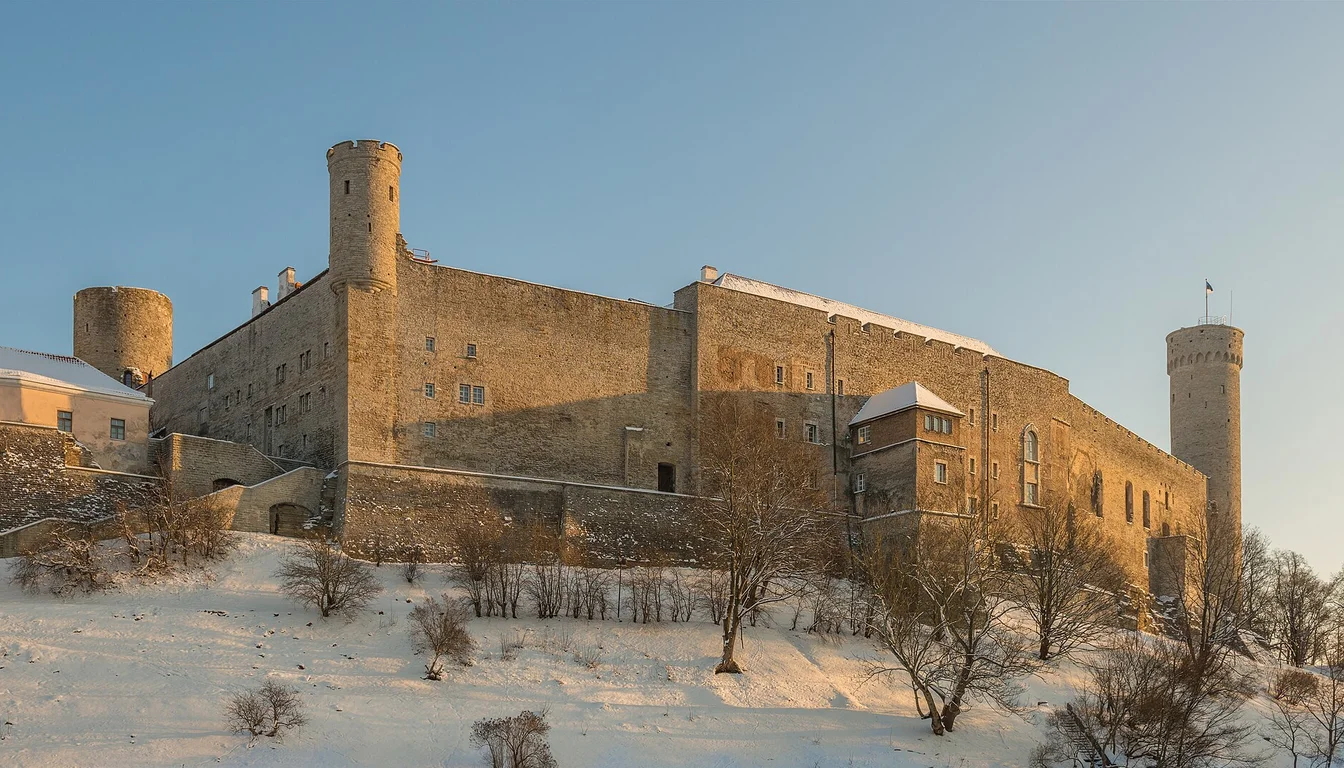
On a Tallinn visit, pair parliamentary history with Toompea Castle, then a museum that explains the twentieth century. A working parliament has its own access arrangements. Do not assume an exterior walk gives entry to the building.
Latvia: republic, occupation and restoration
Latvia proclaimed its republic on 18 November 1918. In 1940 the Soviet Union occupied the country. Nazi German occupation followed during the Second World War, and Soviet rule resumed before the war ended. The Museum of the Occupation of Latvia explains the different occupation periods and their consequences. The Supreme Council's 4 May 1990 declaration began the restoration of independence; the constitutional law of 21 August 1991 ended the transition period. Latvia's parliamentary history places those decisions alongside the return of the Saeima.
The Saeima and the restored constitution
Latvia restored the operation of its 1922 constitution rather than adopting the same kind of new constitutional text as its neighbours. The Saeima's historical account dates the constitution's full return to effect to 6 July 1993, when the fifth Saeima convened. The 1991 independence transition and the 1993 parliamentary milestone are distinct.
Troop withdrawal and Skrunda, 1993 to 1999
The end of Soviet rule and the departure of Russian military forces had different dates. Lithuania's withdrawal milestone came in August 1993. The main withdrawal from Estonia and Latvia was completed in August 1994. The Latvian Foreign Ministry's historical study describes the negotiations and the separate problem of the Skrunda radar installation.
Latvia's National Encyclopaedia account of troop withdrawal records a radar-operation deadline of 31 August 1998 and the site handover on 21 October 1999. Contemporary RFE/RL reporting also dates the handover to 21 October. The main troop withdrawal, the end of radar operations and the handover of the installation were three distinct stages.
Vaira Vike-Freiberga
Vaira Vīķe-Freiberga was elected Latvia's president on 17 June 1999 and served until 2007. The presidency's biography traces her scholarship in psychology and Latvian folklore, her academic career in Canada and her return to Latvia. Her election belongs alongside the parliamentary and military-withdrawal milestones when tracing Latvia's state institutions in the 1990s.
Lithuania: statehood and the 1991 defence of independence
Lithuania's medieval state developed on a different path from the territories ruled by the Livonian Order. The Act of 16 February 1918 restored an independent Lithuanian state. Soviet occupation in 1940 and Nazi occupation in 1941 were followed by Soviet rule again. On 11 March 1990 the Supreme Council adopted the act restoring independence. The Seimas history resources document the parliament and the struggle to protect that decision.
January 1991 brought Soviet attacks on institutions in Vilnius. The TV Tower and parliament are therefore places of recent civic history as well as city landmarks. The occupation museums and memorials guide treats those events alongside Riga's barricades while keeping the distinct sites and victims separate.
Lithuania's 1992 constitution
The Seimas's constitutional text records adoption by referendum on 25 October 1992. Restoring independence in 1990, defending it in January 1991 and adopting a constitution in 1992 were different parts of the state transition. A chronological account needs all three rather than placing the entire institutional change on one independence date.
Lithuanian communities in Chicago
Lithuanian history also includes communities abroad. The Lithuanian consulate's Chicago account describes the city's importance to the diaspora. For a trip focused on migration, connect that account with Lithuanian museums' collections on emigration and family history. Institutions on both sides of the Atlantic can help explain how language and cultural ties developed across borders.
Use museums to add context
Build a route around a period rather than trying to cover every century in one afternoon. Medieval collections and twentieth-century memorials require different reading. The Baltic itineraries help set a country sequence, while the guidebook comparison offers references for a slower museum trip. Choose the Tallinn sights or compare places to stay across the three countries after choosing the museums, so travel time does not crowd out the visit itself.
Photograph credit
Toompea loss 2014.jpg by Abrget47j, CC BY-SA 3.0. Cropped and resized.
