
MS Estonia: findings and memorials
Read the official chronology and findings on the 1994 MS Estonia disaster, then locate Tallinn’s memorial and maritime-history resources.
Last updated October 2026
Contents7
MS Estonia sank in the Baltic Sea on 28 September 1994 while travelling from Tallinn to Stockholm. The disaster killed 852 people; 137 survived. The official investigation records 989 people aboard. This page distinguishes the 1997 investigation from the later assessment of new findings and explains where to learn about the disaster respectfully in Tallinn.
The voyage and sequence of events
The official investigation document collection includes the Joint Accident Investigation Commission's 1997 final report. Its chronology begins with the ship's departure from Tallinn on the evening of 27 September and follows the casualty during the early hours of 28 September. The ship encountered rough seas. Failure of the bow visor and the associated bow-ramp arrangement allowed water to enter the vehicle deck.
The Finnish investigation authority hosts Chapter 1 of the joint report. The following sequence uses the report's times, with approximate times kept approximate.
| Date and time | Recorded sequence |
|---|---|
| 27 September, 19:15 | Departure from Tallinn |
| 28 September, before 01:00 | An unusual metallic sound was reported near the bow |
| Around 01:15 | The visor separated, the ramp opened and water entered the vehicle deck |
| 01:22 | The first Mayday was received |
| Around 01:30 | The starboard side was submerged as the list increased |
| Around 01:50 | The ship disappeared from nearby ships' radar |
| 03:05 | The first rescue helicopter arrived |
Scroll for more →
The rescue continued through the night and morning. The report records 138 people rescued, of whom one later died in hospital, leaving 137 survivors. Individual observations have uncertainty; the table is an investigation's reconstruction rather than one person's minute-by-minute account.
Why listing constrained evacuation
The vehicle deck was a broad space, so water there could shift as the ship moved and reduce stability. A heavy list changed the geometry of stairs, corridors, doors and open decks. Routes that would normally be walkable became difficult or impossible. Movement through interior spaces and reaching a place from which to leave the ship were therefore central constraints, not merely questions of whether a lifeboat existed.
The commission's evacuation analysis, Chapter 16, links the rapid increase in list with the limited time available to escape. It describes the constraints on reaching open decks and leaving the vessel. These findings explain the event historically; they are not a set of improvised instructions for passengers on a present-day ferry. Current safety directions belong to the vessel's crew and approved procedures.
What the 1997 report concluded
The Joint Accident Investigation Commission involved Estonia, Finland and Sweden. Its final report, published in December 1997, identified failures in the bow-door system and water entering the car deck as central to the sinking. The full report includes technical evidence and discussion of design, inspection and operating circumstances. Short summaries cannot replace its evidence or make every later claim about the wreck part of that conclusion.
Use the official collection above to read the report itself. The bow visor, bow ramp, hull and vehicle deck are different parts of the ship. Keeping those terms separate helps avoid confusing the findings about the bow arrangement with later observations of damage elsewhere.
The December 2025 assessment
The official release of 16 December 2025 announced the final report of the preliminary assessment conducted by the Estonian, Swedish and Finnish safety-investigation authorities. It assessed new findings, including hull damage. The authorities concluded that the new evidence did not justify reopening the 1997 investigation and explained the observed damage in relation to the seabed.
The report date and its purpose matter. The preliminary assessment considered new evidence, while the 1997 joint investigation examined the disaster's causes and circumstances. Read each report's scope and conclusions to understand which questions it addresses.
Tallinn: the Broken Line memorial
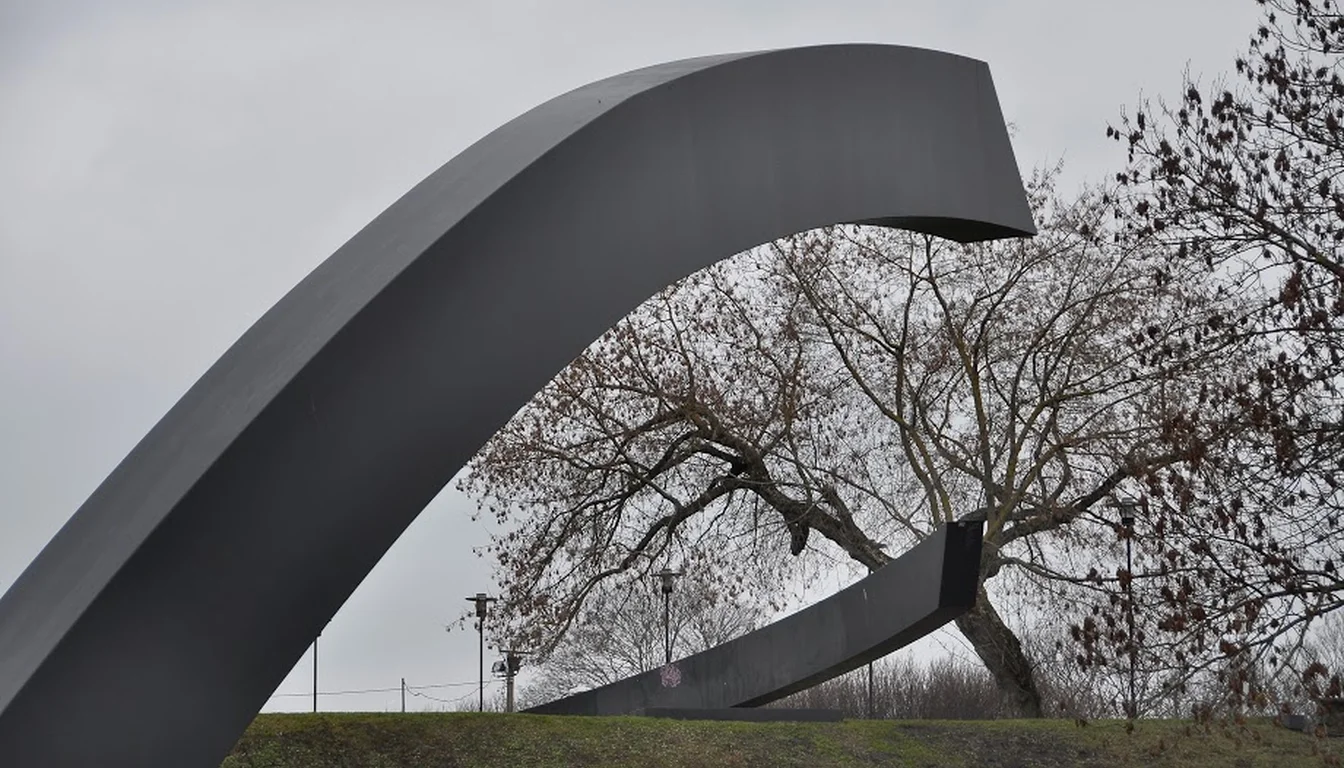
The Broken Line memorial on the edge of Tallinn's historic centre commemorates the victims of MS Estonia. Visit Tallinn's official visitor information supplies the location and city map. Approach it as a memorial, with space for people who come to remember relatives and friends. Keep noise low, avoid obstructing inscriptions, and do not turn another person's act of remembrance into a photograph without consent.
Plan a short, unhurried stop. Check the approach against your mobility needs using the municipality's map and access information. Leave space around the memorial for other visitors and for people who come to remember the victims.
Maritime Museum and further reading
The Estonian Maritime Museum operates the Fat Margaret and Seaplane Harbour museum sites. Check which exhibitions are on view, the site's address and current access information before travelling. A maritime-history visit can give context for Baltic shipping, but no particular disaster exhibit is promised without the museum's current confirmation.
For the surrounding city, Tallinn's sights guide helps allow enough time for the memorial visit. For travel planning, the Estonia ferry guide covers routes to Estonia and the Baltic cruise overview explains cruise journeys through the region.
Photograph credit
Tallinn Estonia monument 2 Wikimapia vc.jpg by Wikimapia user 227310, via Wikimedia Commons, CC BY-SA 3.0. Cropped and resized.
