
The Baltic Crusades
A sourced medieval timeline of the Baltic Crusades, the peoples and orders involved, and castles and museums that explain their legacy.
Last updated October 2026
Contents9
- Peoples and places before conquest
- The Sword Brothers and the Livonian Order
- Estonia: Danish and German power
- Latvia: conquest was uneven
- Lithuania: a different state-building path
- A short chronology to keep the institutions straight
- Reading chronicles without borrowing their viewpoint
- Plan castles as separate visits
- Photograph credit
The Baltic Crusades were a long series of campaigns, conversions, alliances and conquests. They did not involve a single Baltic people facing one unchanging army. The histories of present-day Estonia, Latvia and Lithuania intersected, but their political outcomes differed. Castles and museum collections can help make that distinction visible.
Peoples and places before conquest
Livs, Latgalians, Selonians, Semigallians and Curonians lived in territories now largely within Latvia. Estonian communities lived farther north, while Lithuanian political power developed to the south. These names describe historical peoples, not a ready-made map of today's nation-states. Rivers, trading routes and local alliances mattered as much as modern borders.
The Latvian National Encyclopaedia's Livonian Crusades account describes the religious and political expansion into the eastern Baltic. Mission and force were intertwined. Baptism could become part of an agreement under pressure, and a chronicle's language about conversion can obscure the local struggle over land and authority.
The Sword Brothers and the Livonian Order
The Sword Brothers were established in 1202. This military religious order participated in conquest around the expanding ecclesiastical centres of Livonia. It did not act in complete harmony with every bishop or secular ruler. Their shared religion did not remove competition for jurisdiction and property.
The order's defeat at the Battle of Saule on 22 September 1236 was a major turning point. In 1237 its remaining members were incorporated into the Teutonic Order. The encyclopaedia's history of the Teutonic Order in Livonia explains the resulting Livonian branch. The Teutonic Order's Prussian territories and its Livonian branch should not be treated as one place on a visitor map.
Estonia: Danish and German power
Northern Estonia also came under Danish rule. Tallinn's medieval political history therefore differs from a simple story of conquest by the Sword Brothers alone. The 1238 Treaty of Stensby settled relations involving Denmark and the order; Denmark sold its northern Estonian territory to the Teutonic Order in 1346. These stages help explain why medieval Tallinn has both Danish and German connections.
Read Toompea Castle's visitor history alongside the Estonian History Museum for the local setting. The present castle and parliamentary buildings contain later layers. What stands today is not an untouched model of a thirteenth-century fortress, and an exterior visit does not establish access to every interior.
Latvia: conquest was uneven
Resistance and shifting alliances continued after an order gained a fortified base. Campaigns against different peoples occurred at different times. It is misleading to assign a single conquest date to every part of Latvia or to assume that a chronicle's announcement of conversion ended conflict. The Livonian Crusades account above offers the fuller regional chronology.
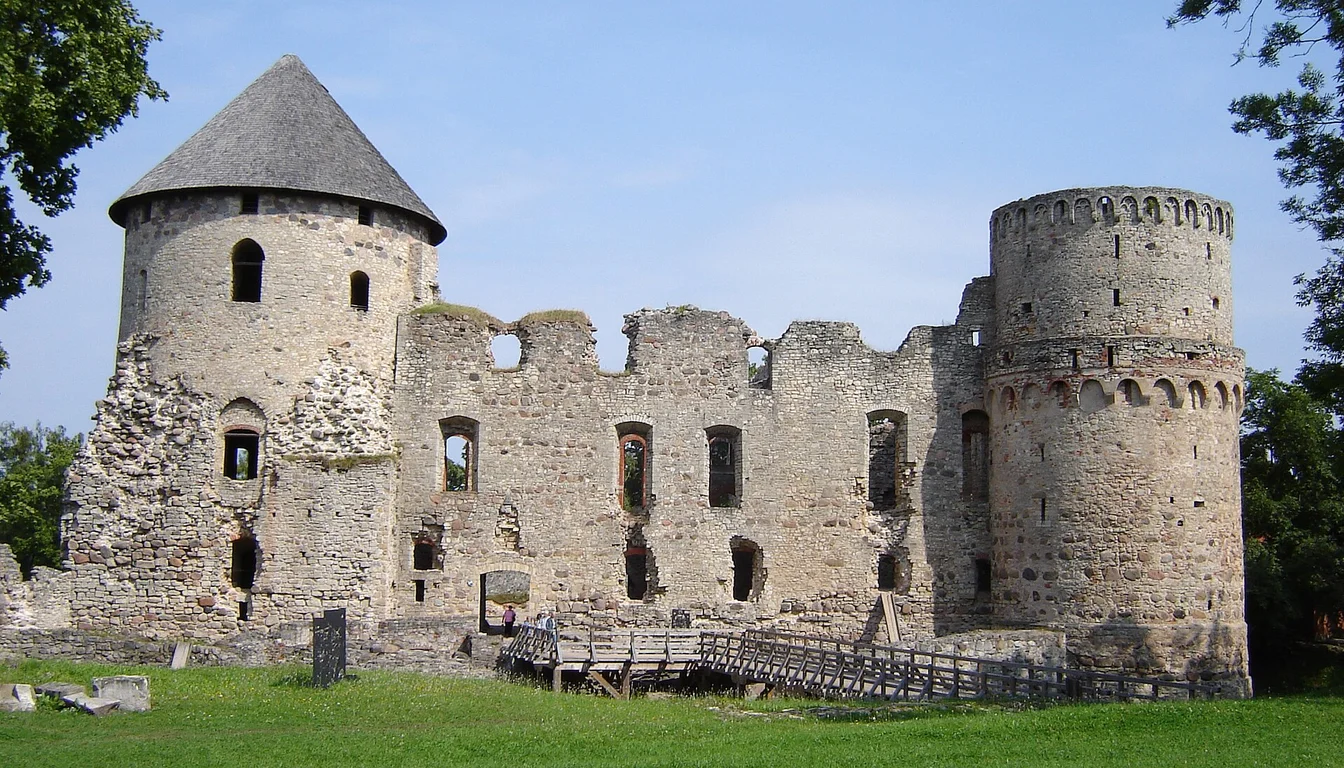
Cēsis Castle is useful for understanding the order's institutions. The castle museum provides the history of the site and present visiting arrangements. Check which parts of the medieval castle, exhibitions and grounds are accessible on your date. Surviving walls help explain control of a place, but they do not tell the whole story of rural communities living under that authority.
Lithuania: a different state-building path
Lithuania developed a strong polity while fighting and negotiating with crusading powers. Its history should not be folded into the conquest of Livonia. A ruler's baptism, dynastic marriage, war and later Christianisation were different processes. The National Museum of Lithuania provides collections and exhibitions that place medieval statehood in the country's broader history.
The Palace of the Grand Dukes of Lithuania gives another route into the political and cultural world of the grand duchy. Its reconstructed setting and archaeological displays need to be understood on their own terms. A palace visit is not a substitute for the full military chronology, but it can show how Lithuanian statehood continued beyond the crusading period.
A short chronology to keep the institutions straight
| Date | Event | Why it matters |
|---|---|---|
| 1202 | Sword Brothers established | A distinct military order enters the Livonian campaigns |
| 1236 | Battle of Saule | Defeat changes the order's future |
| 1237 | Incorporation into the Teutonic Order | The Livonian branch takes shape |
| 1238 | Treaty of Stensby | Danish and order interests in Estonia are settled |
| 1346 | Denmark sells northern Estonia | Control changes again, long after the first campaigns |
Scroll for more →
The linked encyclopaedia entries supply these dates. They are institutional milestones, not a complete list of battles or a claim that local resistance ended at each one.
Reading chronicles without borrowing their viewpoint
Medieval chronicles were written for particular audiences. Their descriptions of victory, conversion and enemies reflect that purpose. The National Encyclopaedia's account of the Livonian Rhymed Chronicle helps identify that perspective. A chronicle can be valuable evidence without being a neutral transcript of what every side thought.
Read a chronicle alongside a scholarly edition or the museum's interpretation. Compare its account with objects, archaeological finds and other written records. During a visit, look for the evidence an exhibition uses to explain a battle, settlement or religious change.
Plan castles as separate visits
The Baltic itinerary choices help place castles within a route rather than adding every fortress to one day. A Baltic guidebook with historical coverage can add context before arrival. Check each museum's current hours, terrain and access, especially where towers, stairs or uneven grounds are involved. A slower visit to one well-interpreted site can explain more than several hurried exterior photographs.
Photograph credit
Cesis Burgruine1.jpg by Greifen, CC BY-SA 3.0. Cropped and resized.
